

The Autonomous Enterprise Is Not a Vision Statement. It’s an Architecture Decision.
Amit Tiwari, SVP of Agentic AI at The Silicon Partners (TSP), explains why becoming an autonomous enterprise is an architecture decision: a workforce model of agents, robots and people, an orchestration layer and governance, rolled out in three phases. It is for technology leaders, especially SAP customers, moving from task automation to autonomous outcomes.
By Amit Tiwari, SVP Agentic AI, Intelligent Automation & Innovation
Published 11 min read

Most conversations about Agentic AI start in the wrong place.
They start with the technology — large language models, retrieval-augmented generation, agent frameworks, multi-agent protocols. Executives sit through demonstrations of impressive capabilities and walk away with one of two reactions: either they’re excited about something they can’t yet operationalize, or they’re skeptical because they’ve heard the same “transformational” pitch about every technology wave for the past decade.
I’ve been in both of those rooms. And after leading agentic AI programs across dozens of enterprise environments, I can tell you: the technology is the easy part.
The hard part — and the part that actually determines whether your organization becomes an autonomous enterprise or stays a collection of automated tasks running in silos — is architecture.
We’ve Been Automating the Wrong Thing
For the past several years, enterprises have invested heavily in automation. RPA programs scaled. Bot libraries grew. Process owners identified hundreds of automation candidates, and delivery teams built them. By most measures, it worked.
But here’s what we got wrong: we automated tasks, not outcomes.
A bot that extracts invoice data runs in one system. A bot that validates purchase orders runs in another. A workflow that routes exceptions to a human queue is in a third. None of them talk to each other. None of them adapt when business rules change. None of them know that the invoice, the PO, and the exception are all part of the same business event.
We built efficiency in silos. And siloed efficiency has a ceiling.
The enterprises pulling ahead aren’t the ones with the most bots. They’re the ones that asked a different question: not “which tasks can we automate?” but “which outcomes do we want to make autonomous?”
That’s the shift from automated to autonomous. And it changes everything about how you architect your programs.
What an AI Agent Actually Is — and Isn’t
Before we go further, let me be precise about something, because the market has made “agent” mean everything and therefore nothing. There are three distinct levels of maturity — and confusing them is the most common strategic mistake I see.
AI-Enabled Automation
Traditional automation enhanced by AI insights — ML models, NLP, AI OCR — still following predefined paths. Smarter, but not autonomous.
RPA bot using AI OCR to extract invoice data but following a static, predefined workflow
AI Agents
Software entities that perceive environments, set intermediate goals, take action, observe results, and adapt. They pursue objectives, not scripts.
Agent managing invoice approvals by evaluating evolving business rules and learning from resolution patterns
Agentic Orchestration
Agents managing entire processes across systems, departments, and decision points. Humans involved only at genuine exception points.
Agent managing end-to-end vendor onboarding across procurement, legal, and finance
The distinction matters because the architecture for each is fundamentally different. You cannot retrofit an agentic program onto an RPA foundation without rethinking how work is organized, governed, and measured.
The Architecture That Makes It Enterprise-Ready
Here’s what I’ve learned from building these systems: an agent that can answer questions and generate responses is a capable agent. It is not an enterprise-ready agent. Those are not the same thing.
Enterprise-ready means the agent operates within a three-layer architecture. Each layer is essential. None is sufficient alone.
Layer 1: The workforce model
Who does the work: AI agents for goal-directed reasoning, RPA robots for deterministic execution, and people for judgment and approvals.
Layer 2: Orchestration
How the work is coordinated: task routing (who, when and why), state management and continuity, and a policy engine that sets the agents’ guardrails.
Layer 3: Governance
Enterprise control: zero-trust security and identity, real-time observability and SLAs, and full audit trails.
The mistake I see most often in the workforce model is organizations trying to use AI agents for everything — including tasks that robots do faster, cheaper, and more reliably. The second mistake is keeping humans in loops they don’t need to be in. Both degrade the system’s value.
On orchestration: this is the layer that most enterprise teams underestimate, and it’s where UiPath Maestro has become a significant enabler. Without orchestration, you don’t have an agentic program. You have a set of capable agents running independently with no coordination layer. That’s not autonomous enterprise architecture. That’s chaos with better technology.
Governance is not a constraint on agentic AI. It’s the enabler. The enterprises I’ve seen scale fastest are the ones that built their governance layer first.
The Phased Path to Autonomous
I’m skeptical of any implementation approach that promises enterprise-wide transformation in a single deployment. The most successful agentic programs follow a phased progression that expands autonomous action incrementally — while building the organizational muscle and the trust to support it.
Phase 1
Extraction + Human Escalation
Automate document extraction and structuring. When the system encounters a genuine exception, route it to a human with full context. Humans are still deciding and acting, but the coordination burden is lifted. Cycle time: 2–3 days. Human effort: 45 minutes.
Phase 2
Agents Draft + Human Approval
Agents evaluate, reason, and draft a recommended action. Humans shift from executing work to reviewing and approving recommendations. A profound change — from processor to judge. Cycle time: 4–6 hours. Human effort: 5 minutes.
Phase 3
End-to-End + Audit Trail
Agents act end-to-end — evaluate, decide, communicate, and continue — generating a full audit packet at every step. Humans notified of completions, flagged only on confidence threshold exceptions. Cycle time: 5-10 minutes. Human effort: 30 seconds.
Phase 3 does not mean humans are removed from the enterprise. It means humans are deployed where they create irreplaceable value — in judgment calls that require context, empathy, accountability, or creativity. Everything else runs.
What This Looks Like in Practice
Let me make this concrete with a use case we’ve deployed in production.
A global enterprise runs its vendor onboarding process across three functional areas — procurement, legal, and finance. Before agentic orchestration, the process took 14 days on average, touched seven systems, and required 23 manual handoffs. Exceptions added additional days and required senior staff intervention.
We rebuilt this as a three-phase agentic program. In Phase 1, agents extracted and structured all vendor documentation, bots validated against SOPs, and exceptions were routed to procurement with full context. In Phase 2, agents evaluated vendor risk profiles and drafted approval recommendations. Procurement managers reviewed rather than investigated. In Phase 3, straight-through processing for standard vendors — agents evaluate, bots execute the ERP record creation, humans receive a completion notification and audit packet.
- 14d → 48hVendor onboarding cycle time for standard vendors
- 23 → 4Manual handoffs eliminated across the process
- 100%Human involvement focused on exceptions and final approvals
The SAP Dimension – And why SAP Sapphire 2026 Changed Everything
For enterprises running SAP — which describes most of the Global 2000 — agentic automation has a specific and significant opportunity. SAP is the system of record for the most consequential business processes in the enterprise: financial close, procurement, supply chain, HR, and customer operations. It is also a system where manual effort, exception handling, and cross-system coordination remain stubbornly high.
At TSP, we’ve spent fifteen years building deep expertise at the intersection of SAP and intelligent automation. When we bring agentic AI into that equation, the results are material. And SAPPHIRE 2026 just put rocket fuel behind the opportunity.
Agentic AI and SAP, in production at TSP clients:
GL Posting & Reconciliation
Agents retrieve GL codes by context and policy. Robots execute posting in SAP. Exceptions auto-routed with full supporting data. >98% posting accuracy
Sales Order Processing
Agents read and interpret customer quotation emails. Robots extract, structure, and post orders directly into SAP. Significant cycle time reduction.
Vendor Onboarding
End-to-end document extraction, SOP validation, and ERP record creation. Fully autonomous for standard vendors. 14 days → under 48 hours.
Deductions & Invoice Disputes
Days of manual investigation collapsed to minutes. Agents validate, bots update records, agents draft customer responses. 300+ hours saved per month
Autonomous Finance Close
Joule's Financial Closing Assistant orchestrates posting, accruals, journal validation, and intercompany reconciliation end-to-end. Now natively in SAP Autonomous Suite. Announced at SAP SAPPHIRE 2026.
Autonomous Procurement
Sourcing, Invoicing, Category Management, and Supplier Management Assistants now orchestrate the full source-to-pay lifecycle. GA planned June–September 2026. Announced at SAP SAPPHIRE 2026.
At Sapphire, SAP announced named Joule Assistants across every major business domain. These are not concepts — they have GA dates, governance frameworks, and are built on the same SAP Business AI Platform that TSP’s clients already run on. The domains that matter most for our clients:
Among the Joule Assistants SAP announced at Sapphire 2026:
- Financial Closing Assistant (finance): runs the whole close, from posting and accruals to reconciliation and fixing errors.
- Accounts Receivable Assistant (finance): predicts churn, prioritizes collections, and prepares dunning and dispute workflows.
- Tax and Compliance Assistant (finance): watches for legal changes, simplifies configuration and resolves submission errors early.
- Sourcing Assistant (procurement): runs sourcing from the RFP through bid evaluation to the negotiation strategy.
- Invoicing Assistant (procurement): takes on the heavy lifting in accounts payable, with fewer errors and automated exception handling.
- Supplier Management Assistant (procurement): oversees suppliers from classification to risk monitoring.
- Manufacturing Assistant (supply chain): several agents that coordinate manufacturing operations and guide decisions in real time.
- Planning Assistant (supply chain): handles exceptions, assesses demand fulfillment and analyzes inventory drivers.
- Logistics Assistant (supply chain): coordinates warehouse and transportation operations from arrival to delivery.
Based on SAP’s Sapphire 2026 announcements.
The opportunity in SAP is not about replacing the platform. It’s about removing the manual work that accumulates around the platform — the coordination, the exception handling, the cross-system data movement that no one designed as a human task but that humans ended up doing anyway. SAP is now building that removal layer natively. TSP’s job is to activate it faster than your competition does.
What Separates the Leaders
I’ve now had a version of this conversation with hundreds of enterprise technology leaders. The ones whose agentic programs are delivering results share three characteristics that the ones still in pilot phase do not.
They started with an outcome, not a technology
They didn’t ask “where can we deploy agents?” They asked “which business outcomes are we not achieving because of coordination complexity?” Then worked backward to architecture.
They built governance before they built agents
Counterintuitive, but the organizations scaling fastest designed their observability, audit, and escalation frameworks first. That gave them the confidence to expand autonomous action.
They treated the operating model as a first-class design problem
Agentic automation changes how teams are organized, what skills matter, how performance is measured. The organizations that addressed this explicitly are where adoption is accelerating, not stalling.
The Question Worth Asking
The autonomous enterprise is not a vision statement. It is not a technology investment. It is an architecture decision that you make or defer every quarter.
What changed at Sapphire is that SAP has now made that decision for the platform. Joule Assistants are in GA. The SAP × Anthropic partnership is active. The Autonomous Suite is shipping. The platform has moved. The question is whether your organization moves with it.
The question I ask every technology leader I work with is not “are you interested in agentic AI?” Almost everyone is. The question is: which outcome do you want to make autonomous in the next ninety days?
If you have an answer — even a rough one — you have the starting point for a program that compounds. The first autonomous process builds the governance muscle. The second extends the orchestration layer. The third reaches across systems. By the time you’re asking about enterprise-wide transformation, you’ve already done it.
This is no longer a strategic question about the future. The window for being an early mover is open now — and it will close as your competitors activate the same capabilities on the same platform. The question isn’t if. It’s who goes first in your industry.

About the author
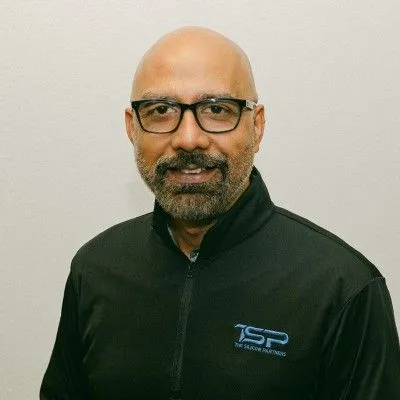
Amit Tiwari
SVP Agentic AI, Intelligent Automation & Innovation
Technology leader with 24+ years of experience driving enterprise transformation through Agentic AI, Intelligent Automation, SAP, AI/ML, and Digital Modernization. Focuses on shaping the Agentic Enterprise, orchestrating AI Agents, automation, enterprise systems, and people to accelerate transformation, improve productivity, reduce operational risk, and deliver sustainable ROI. Experience spans Agentic AI, AI/ML, RPA and Intelligent Automation, SAP transformation, Test Automation, Process Orchestration, Cloud, and enterprise application modernization. I am particularly interested in the convergence of AI Agents + RAG + MCP + Agent-to-Agent (A2A) collaboration + APIs + Automation + Human-in-the-Loop, and how these capabilities can transform complex enterprise processes.
Related reading

Article
Agentic AI Governance Gap
This article from The Silicon Partners (TSP) explains the governance gap between deploying AI agents in SAP environments and having the controls to run them safely. It is for SAP and IT leaders planning agentic AI, and sets out three principles: treat every agent as a governed identity, build orchestration first, and redesign the work.
 SVP Agentic AI9 min read

Article
Robots vs. Agents: Who Wins the Automation Olympics?
This article from The Silicon Partners (TSP) compares traditional rule-based robots with agentic AI across autonomy, memory and learning, adaptability and collaboration, and explains where each fits: robots for structured, predictable work, agents for complex, changing environments. It is for business and IT leaders deciding how to take their automation programs beyond rule-based bots.
SVP Agentic AI5 min read
Article
From Chaos to Control | Empowering Business Managers with RPA
An introduction to robotic process automation (RPA) for business managers. It explains how software robots work on top of existing systems, which repetitive, rule-based processes make good candidates, the gains in productivity, accuracy and scalability, and how to drive adoption through people, process and technology. The Silicon Partners (TSP) offers RPA consulting to plan it.
SVP Agentic AI7 min read

Next step
Start with a free readiness call
Thirty minutes with a senior SAP architect on your landscape, your timeline and your priorities. You leave with a clear next step.
- info@tsp.tech
- Headquarters · Folsom, California
Thanks, we’ve got your message
The right TSP lead will be in touch soon.
- Tell us a little about your SAP landscape and what you're working on.
- A senior SAP architect reviews it before we talk.
- We meet, and you leave with an honest view and a clear next step.